Table of Contents
Cognitive Triad of Distressing Stress And Anxiety. An integral part of experiencing injury is really feeling various from others, whether or not the injury was a private or team experience. Traumatic experiences generally really feel surreal and challenge the requirement and worth of mundane activities of everyday life. Survivors commonly believe that will not completely recognize their experiences, and they might think that sharing their feelings, thoughts, and responses connected to the trauma will drop brief of expectations.

The sort of injury can determine exactly how an individual feels different or thinks that they are various from others. Traumas that produce embarassment will typically lead survivors to feel more estranged from othersbelieving that they are "damaged products." When individuals believe that their experiences are distinct and incomprehensible, they are more likely to look for assistance, if they seek assistance at all, only with others that have actually experienced a similar trauma.
Triggers are frequently connected with the moment of day, period, holiday, or anniversary of the event. A flashback is reexperiencing a previous stressful experience as if it were really occurring in that moment. It consists of reactions that often look like the client's responses during the injury. Flashback experiences are extremely quick and commonly last just a couple of secs, but the psychological side effects remain for hours or longer.
Addressing Social Anxiousness via Eye Movement Desensitization and Reprocessing in Calgary, AB
Often, they occur unexpectedly. Other times, certain physical states raise an individual's vulnerability to reexperiencing an injury, (e.g., fatigue, high anxiety levels). Flashbacks can really feel like a quick motion picture scene that intrudes on the customer. For instance, hearing a vehicle backfire on a hot, bright day may suffice to trigger a professional to react as if she or he were back on army patrol.
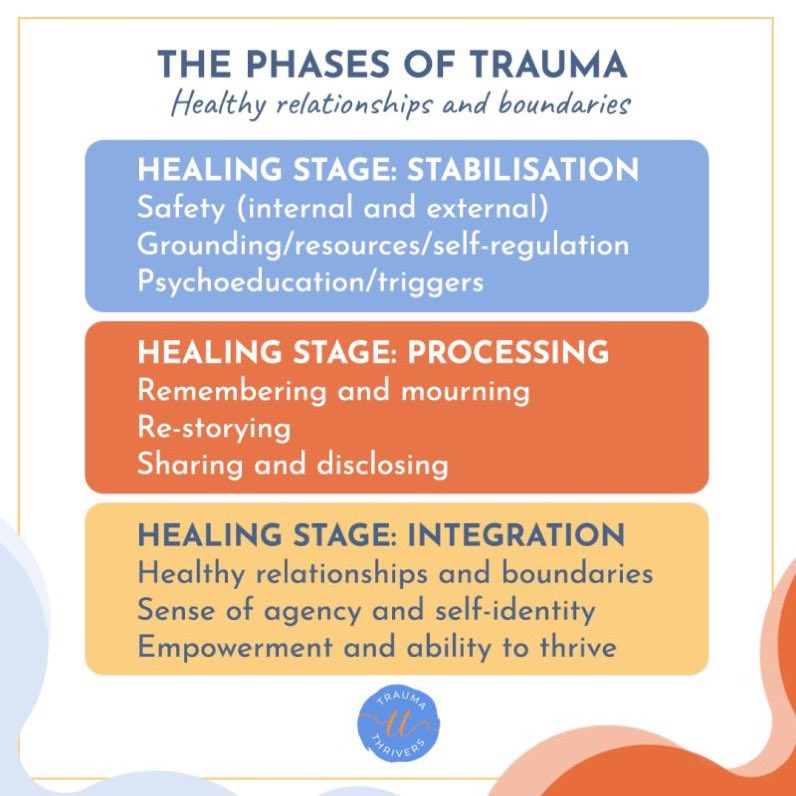
If a client is triggered in a session or during some aspect of treatment, aid the client emphasis on what is happening in the here and currently; that is, use grounding techniques. Behavioral health and wellness solution companies should be prepared to help the client obtain regrounded to make sure that they can distinguish between what is happening now versus what had actually taken place in the past (see Covington, 2008, and Najavits, 2002b, 2007b, for more grounding methods).
Afterward, some clients need to discuss the experience and comprehend why the recall or trigger took place. It typically aids for the customer to draw a link between the trigger and the traumatic occasion(s). This can be a preventive method whereby the customer can prepare for that a given circumstance places him or her at higher danger for retraumatization and needs use of dealing methods, consisting of looking for assistance.
Your Readiness for Your First Eye Movement Desensitization and Reprocessing
Dissociation is a psychological procedure that severs connections amongst an individual's ideas, memories, feelings, actions, and/or sense of identity. Most of us have actually experienced dissociationlosing the capability to remember or track a certain action (e.g., getting to job but not bearing in mind the last minutes of the drive). Dissociation takes place due to the fact that the person is taken part in an automatic task and is not taking notice of his or her immediate setting.
Dissociation helps distance the experience from the person. Individuals that have experienced serious or developmental injury might have discovered to separate themselves from distress to make it through.
In non-Western cultures, a feeling of alternating beings within oneself may be analyzed as being lived in by spirits or ancestors (Kirmayer, 1996). Various other experiences related to dissociation include depersonalizationpsychologically "leaving one's body," as if watching oneself from a range as an observer or through derealization, leading to a sense that what is occurring is unfamiliar or is unreal.
The Follow-Up Stage in EMDR Therapy in Calgary, AB

One significant long-term effect of dissociation is the difficulty it causes in linking strong emotional or physical responses with an occasion. Frequently, individuals might believe that they are freaking out due to the fact that they are not in contact with the nature of their responses. By enlightening customers on the durable high qualities of dissociation while additionally highlighting that it avoids them from resolving or verifying the trauma, individuals can begin to understand the duty of dissociation.
Terrible tension responses differ commonly; frequently, individuals involve in behaviors to manage the consequences, the strength of emotions, or the upsetting aspects of the terrible experience. Some people decrease stress or tension via avoidant, self-medicating (e.g., alcoholic abuse), uncontrollable (e.g., overindulging), impulsive (e.g., risky habits), and/or self-injurious actions. Others may try to obtain control over their experiences by being aggressive or subconsciously reenacting elements of the injury.
Commonly, self-harm is an effort to deal with psychological or physical distress that seems frustrating or to manage a profound feeling of dissociation or being entraped, defenseless, and "harmed" (Herman, 1997; Santa Mina & Gallop, 1998). Self-harm is related to previous childhood sex-related misuse and other kinds of trauma as well as chemical abuse.
An Clinical Foundation Behind EMDR Treatment and ART
Enhanced dedication to an individual objective. Modified top priorities. Enhanced philanthropic providing and volunteerism. Marco, a 30-year-old male, looked for treatment at a local mental university hospital after a 2-year round of anxiety signs. He was an energetic participant of his church for 12 years, however although he looked for aid from his priest concerning a year ago, he reports that he has had no contact with his priest or his church because that time.
He describes her as his soul-mate and has had a hard time comprehending her activities or exactly how he can have prevented them. In the initial intake, he stated that he was the very first individual to discover his partner after the suicide and reported sensations of dishonesty, pain, anger, and destruction given that her death.

Navigation
Latest Posts
Real Transformation Can Happen with Trauma Therapy: Patient Journeys
Emergency Help and Services
Traumatic Memory Selection during Eye Movement Desensitization and Reprocessing